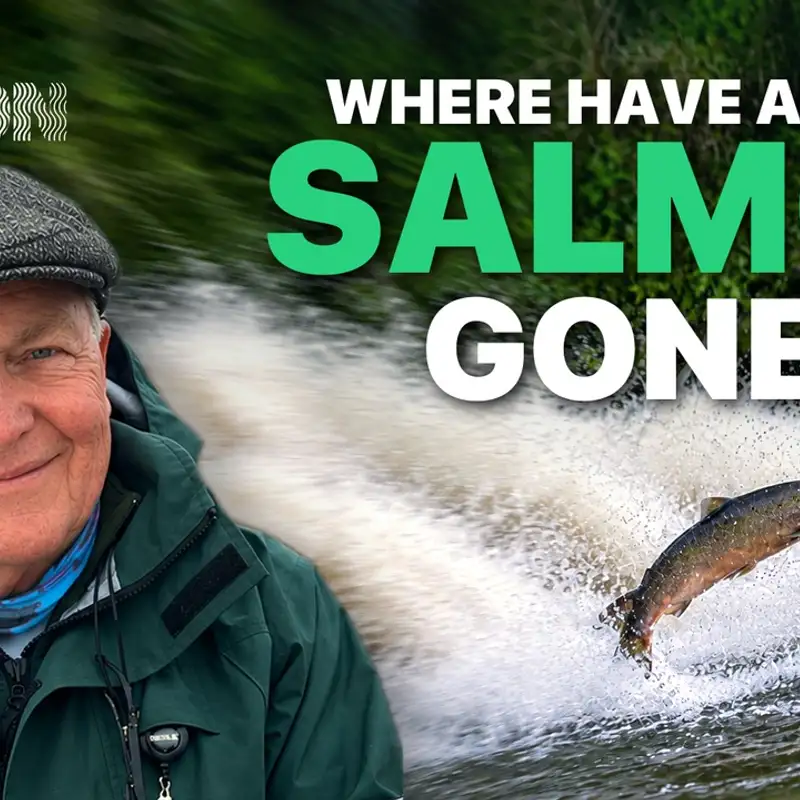
Professor Ken Whelan returns to The Last Salmon for a deep dive into what happens to Atlantic salmon once they leave our rivers and head out into the North Atlantic.
For decades, the ocean was the great unknown in the salmon story. Then projects such as SALSEA began to reveal extraordinary migration routes stretching from Ireland, Britain and mainland Europe towards the Norwegian Sea, the Faroes and Greenland.
But despite everything we have learned, Ken argues that there are still huge gaps in our understanding of what is happening to salmon at sea — and that time is running out.
In this episode, Jim Murray and Ken discuss:
• The extraordinary “smolt highway” across the North Atlantic
• Why salmon research effectively stalled after the original SALSEA work
• How warming seas and changing ocean currents could alter salmon migration
• The possibility of Atlantic and Pacific salmon increasingly sharing habitat
• What we know — and still don’t know — about salmon bycatch in commercial fisheries
• Why estuaries may be one of the most overlooked parts of the salmon lifecycle
• Pollution, high water temperatures and the pressures facing returning adult salmon
• The case for stronger protection of migratory fish at sea
• Aquaculture, sea lice and the latest concerns around wild salmon and sea trout
• Why Ken believes we need “immediate action, not immediate discussion”
• The importance of protecting salmon strongholds for the future
• Why salmon research effectively stalled after the original SALSEA work
• How warming seas and changing ocean currents could alter salmon migration
• The possibility of Atlantic and Pacific salmon increasingly sharing habitat
• What we know — and still don’t know — about salmon bycatch in commercial fisheries
• Why estuaries may be one of the most overlooked parts of the salmon lifecycle
• Pollution, high water temperatures and the pressures facing returning adult salmon
• The case for stronger protection of migratory fish at sea
• Aquaculture, sea lice and the latest concerns around wild salmon and sea trout
• Why Ken believes we need “immediate action, not immediate discussion”
• The importance of protecting salmon strongholds for the future
Ken also explains why salmon need to be treated as a genuinely marine species when research programmes and funding decisions are being made — and why ICES, NASCO, governments and conservation organisations all have a role to play.
We know far more about Atlantic salmon than we did 20 years ago.
But as Ken makes clear, we still don’t know nearly enough.
And the one thing we cannot control is time.
Season 3 of The Last Salmon is in partnership with Loop — driving change for wild fish and wild places.
Subscribe to The Last Salmon for more conversations with anglers, scientists, conservationists and campaigners working to protect the wild Atlantic salmon.
The Last Salmon, presented by actor and activist, Jim Murray MBE offers hope and solutions to the tragic story that is unfolding for an iconic species in crisis - the wild salmon.
For regular updates, follow the show at Instagram.com/TheLastSalmon